

Stock Market Forecast
The 2026 Stock Market Update: A Post War Bull Market Supercycle?
Will the US stock markets hit a lower bottom, and is the ultimate buy the dip moment for global investors who want to ride the US economic resurgence?
Have you identified the best sectors and the best stocks to buy? Are you ready to invest?
Fear, uncertainty and volatility are subduing stock prices. However, earnings forecasts and the re-establishment of the US in the world order, along with this country’s dominance in economically pivotal AI technology, paint a very positive picture going forward. Most investors are looking for the bottom, but it might be here now. This weeks plunge in prices shows bearish investors unloading their assets at bargain prices — setting the stage for fortunes to be made in the year ahead.
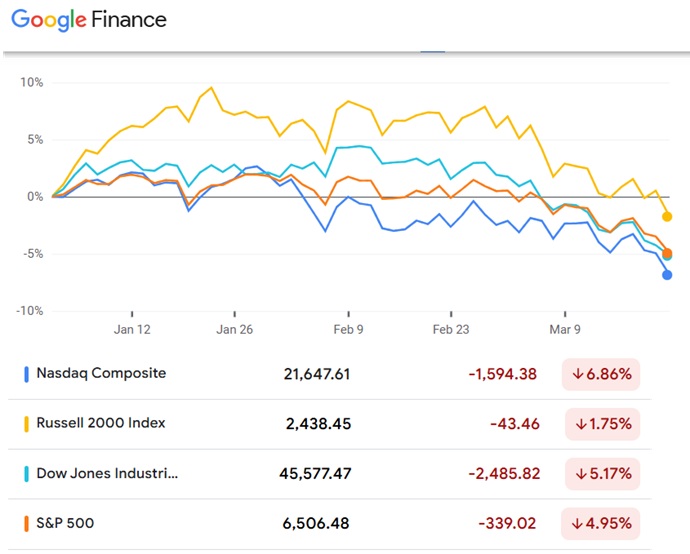
The current stock market forecast remains bullish for the long term, with the S&P 500 (now at 6500 ) projected to reach 7,800 by year-end 2026. That’s a 25% upside over 9 months. Some predictions now in mid-march are reaching beyond 8,000.
Summary of this post: The state of the US stock market is driven by three primary factors: the maturation of the AI earnings cycle, a pivotal Federal Reserve leadership transition in May 2026, and a massive influx of foreign direct investment into U.S. manufacturing. While investor fear, wars, and tariff-related fear is driving the 3-month outlook the 5-year macro-trend points toward a historic “supercycle” as the U.S. economy decouples from global laggards. US energy, manufacturing and AI technology dominance looks more certain with the defeat of despotic, terrorist regimes and the coming lower interest rates in the US.
As we navigate this “Trump 2.0” transition, the old analytical templates are breaking, creating big challenges for some forecasters. It’s not just about watching interest rates; we’re witnessing a fundamental shift in how capital flows. While the bears point to a K-shaped recovery and slowing consumer spend, they are missing the effect of AI productivity—where one tech breakthrough triggers twenty-five sub-sector rallies. The question is less about the market peak, but whether investors are positioned in the “lagging” sectors—like the Russell 2000, that are finally ready to catch the AI tailwind.
Experts and analysts talk about the mean inversion trade — which is “Sell the Leaders and Buy the Laggards.
The rationale for that trend might be warranted if the US military has crushed the Iranian terrorist regime and the flow of oil through the strait of Hormuz resumes. This would reduce the price of energy and thus reduce inflation, interest rates, spark investment, and re-stimulate consumer spending. AI would be supported by cheaper energy for data centers and a resumption of normal global business.
President Trump’s successes against the world’s worst warring elements don’t change the longer-term outlook. Yet it does unlock the potential of the US national economic resurgence to the number one economy in the world.
Some Geopolitical Battles Remain
The battle for the 2026 economy is a face-off between political deregulation and institutional inertia. With J. Powell’s term nearing its end and a pro-nationalist growth agenda taking hold, we’re seeing a “repatriation of opportunity” that mirrors the growth rates previously enjoyed in Asian markets. This isn’t just a buy-the-dip moment; it is a structural pivot. By analyzing the intersection of geopolitical shifts and earnings momentum, we can see that the path to record heights is being paved by a unique brand of American economic exceptionalism.
Many stock market gurus and analysts, including Tom Lee (projects 7700 for the S&P 500) are predicting 7000+ for the S&P 500 for year-end 2026. What happens if the markets stagnate again, just as they did last December? Morgan Stanley’s new outlook puts the S&P 500 at 7,800 by the end of 2026. Despite the 3-month outlook having dimmed, late spring of 2026 could be the beginning of a strong bull run, setting up a positive 5 year market run.
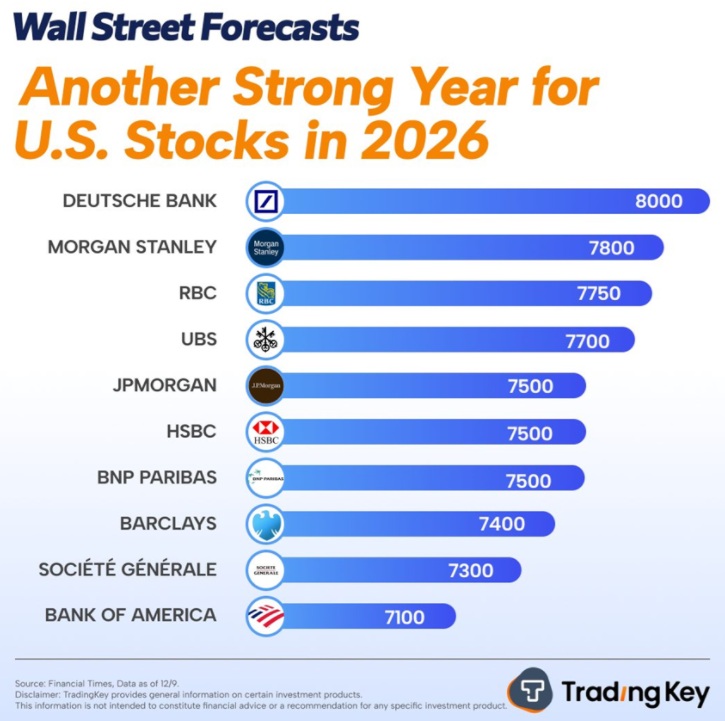
“We believe that we’re in the midst of a new bull market and earnings cycle, especially for many of the lagging areas of the index,” — Mike Wilson, Morgan Stanley’s Chief of US equity.
FED Keeping Interest Rates High for 6 Months More
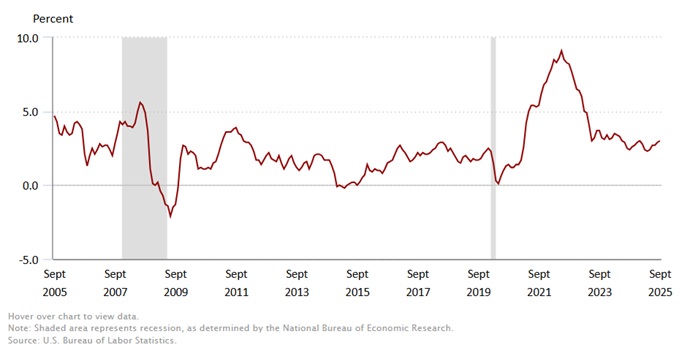
Given the massive inflows of capital investments, it stands to reason the US economy is going to grow and flourish. This will keep inflation above 2%. As you can see in the chart below, inflation is at historically normal rates, perhaps healthy to grow the US economy. The FED is being unreasonable in holding rates high which puts a massive weight on every sector and makes life very difficult for the bottom 90% during this K-shaped recovery.
We’re in the early innings of the AI era, yet the long-term economic forecast is darkened by the coming unemployment trend due to AI adoption. But for the S&P and NASDAQ 100, and Dow Jones blue chips, AI is a tailwind.
AI is a threat to most nations, but the US is an exception, given the seat of AI will be in the US. And the US with Trump is pro-nationalist growth with protections from price and product dumping predators such as China. With AI and automation manufacturing setup in the US, it should better compete with China. China’s economy is slowing significantly.
For some, the volatility and lopsidedness of the stock market are simply an avalanche waiting to happen. Trump’s tariffs face a supreme court decision for instance. If tariffs are declared illegal, the stock market will crash. Investors may not feel this is likely, or they’d be selling their stocks. They’re being patient so far. With the Russian war extended with Trump tariff actions, no one is sure whether oil will collapse or rocket to $100 a barrel. The uncertainty of all economic and geopolitical factors is causing many to stay out of equities. So there is a considerable amount of funds waiting in limbo for the green light.
High Interest Rates Damaging the US Economy
Low interest rates open up economic and business opportunity as more small businesses are able to borrow and consumers can spend a little easier.
Interest rates are the number one market factor, ahead of weaker earnings, tariffs, inflation, etc. And the AI trade is a key one too, which if it falters, could create havoc for the tech-heavy S&P and NASDAQ (-8% in last 24 days) indexes. Global analysts are reassessing tech stock valuations, as global stock markets too are having their issues. As each week brings its own news and reports, it doesn’t really change the 6-month or 5 year stock market forecast. Trump’s trajectory is fully supportive of US businesses, with lasting pressure on nations to be fair on trade and appreciate their access to the world-dominant USA market.
Hear What Tom Lee of Fundstrat Says about Markets and Forecasts
 Tom Lee, the venerated stock market forecaster who articulates the stock market outlook and factors very well. You’d be wise to listen to what he says about this “supercycle” and how analysts use outdated models and templates when evaluating the current economic situation.
Tom says 80% of trading essentially depends on the macro environment. He points out that companies are dynamically and in real time, adjusting their business models to cope with inflation and Fed tightening, and have still delivered excellent earnings. He’s speaking about the strength of big companies and a strong economy being protected and groomed by President Trump.
The end of the US government shutdown may be giving the markets some lift today. The Whitehouse predicts a return to 3% GDP growth early in 2026.
The lost, lonely Russell 2000 small business index lingers in a high interest rate, high tax SMB purgatory, where supply sources and export partners are a constant worry. It’s a faceoff between Trump and the FED to see who flinches first. Neither will, because Powell and other FED members are simply waiting till the end of their careers, while Trump continues as President.
The US dollar is declining which discourages imports and strengthens US exports. These positive events don’t change the 5 year stock market forecast, yet they do move the time to recovery for the economy a little closer.
See more on the current stock market bull rally. Will 2026 see yet another bull market rally, or are investors going to be all-in by the time December arrives? See what Tom Lee says about the bull rally and what’s happening next. He believes in a strong year end rally and a positive 2026.
Review All the Factors Driving Equities
As you watch the highly volatile, and before you invest, consider that equities are at their highest and are heading down strongly. Some analysts believe AI is still driving the indexes, and the Mag7 stocks are full of FOMO investors piling in to ride the AI wave. They’re hiding in Google, Nvidia, and META.
Analysts Quickly Moving Forecasts Up and Down as Political Winds Blow In
Bank of America (BofA) believed the S&P 500 to reach 6,666 by the end of 2025 driven by expectations of strong US market performance, with projected 13% earnings growth and 2.4% GDP expansion. S&P 500 earnings may grow further, but the GDP expansion is a question mark, really dependent on how stubborn Trump is on trade deals. UBS Global Wealth Management up its 2025 year-end target for the S&P 500 to 6200 from its prior forecast of 6000. BMO’s Belsky sees the S&P 500 rising to 6,700 by end of 2025.
Earnings Outlook Very Positive
Earnings per share are strong and growing. The S&P 500’s forward earnings per share estimate is up 2.36% to 73.09 from the previous quarter, according to YCharts. Analysts predict an S&P 500 earnings growth of 4.9% year-over-year earnings growth for Q2, 2025.

S&P 500 Forward Earnings Projections
There are many market forecast indicators yet earnings per share forecasts are very important to investors. Ycharts believes forward EPS will hit $73 within 12 months. That’s up 15%.

The FED is expected to hold rates at next week’s meetings, yet President Trump is supporting a new FED chair to replace J Powell. Trump will likely push for lower rates, which would give small US businesses and the stagnant housing market a boost.
Jurrien Timmer, Director of Global Macro for Fidelity Management & Research Company in his report, believes the worst may be over.
We could be moving into a FOMO environment as inflation has eased and earnings forecasts are positive. If a trade deal is reached with China, the upside could be strong. Although Trump is being tough in his agenda, he is under pressure to make some progress on trade and gain access to China’s rare earth metals supply. The saviour here might be that Trump has created his own achilles heel by confronting a nation the US is dependent on. Experts had predicted the tariff inflation, supply constraints and uncertainty would peak this summer. A China deal might ease that issue. On the positive side, the trade deficit with China is falling.
Recent Forecasts Now Being Revised the Banks and Research Firms
Do you have confidence in the experts forecasts? They under-estimated the S&P, clearly not seeing the full potential. If we see the Santa Claus rally, through some random event, they could be off by about 10% on their predictions.

Earnings projections for communications services and infotech are being reported as strong. Consumer spending contracted for the first time in a year, sending some warning signals about the general economy. The US economy added 177,000 jobs in April, which was above the 135,000 forecast by economists, slightly below the 228,000 jobs added in March

The 3 month to 6 month outlook and predicitions remain the same during this transition phase and my own one year to 5 year forecasts aren’t changing much either. The US economic revival seems to be on track, and Americans must wait out 2025. That would mean right now is the best time to buy US stocks.
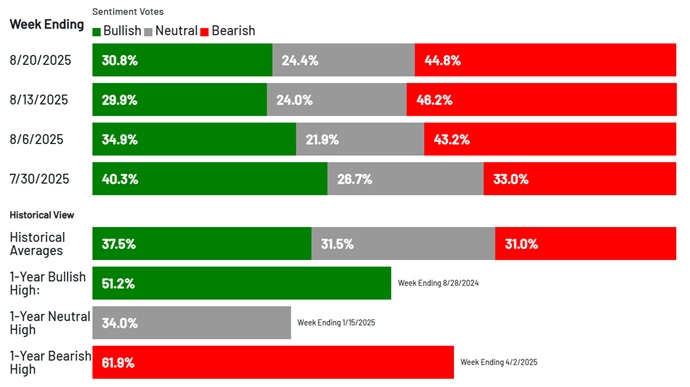
However, the Trump 2.0 era transition continues on a somewhat volatile path, with the investment news sending stocks up and down irregularly. As these AAII charts show, and surprisingly, investors are becoming more bearish, perhaps due to the tariffs. Current is down 7% from long term averages.

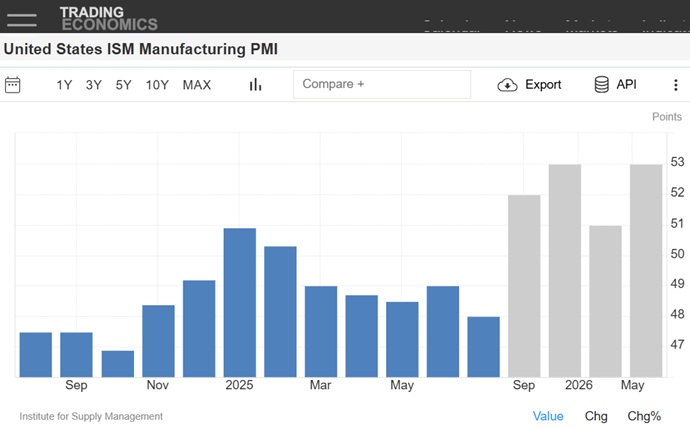
Below, the PMI index has slid during the year, yet remains up from last year. Estimates are for substantial growth beginning this fall.
After the Transition: 2026 and Beyond
Investors should harken back twenty years to when China was going through this same transition with an infusion of trillions in US and European cash investment where it enjoyed unbelievable GDP growth rates. J Powell and the FED should take note that despite that fast growth, China didn’t suffer inflation, because it didn’t have regulations stunting supply. China was free to do whatever it liked in trade (enjoying massive support/favoritism from the WTO). It is the US’s turn beginning now. This means US stocks are still the right choice.
The 25% and reciprocal tariffs will force US and foreign companies to move their operations to the US, or face being shut out of the lucrative, massive US marketplace. It’s not an outcome corporations relish. They’ll likely accelerate the process they’ve been resisting so hard. President Trump’s lenience is showing however, as he tries to soften the recessionary trend and its voices.
Over the past year, investors overall haven’t gained much. It’s all about choosing the best stocks and the best sectors. They say don’t buy the dip, however we may have seen the bottom, but rises going forward might be weak. The world’s economy has been shortcircuited for a while. Consumer spending is falling but still the US as a whole will come out of this better than any country. All other countries have so much to lose which is why they’re meeting with Trump.
The Trump changes reflect the recent volatility, however that will likely ease through 2025. Once deregulation is implemented (the Dems will fight it), the full potential of the United States will be in full play. Choosing stocks for the road ahead is wiser than trying to pick ponies in this race. Returns from the S&P might only be from a handful of stocks while the rest linger in mediocrity.

In reality, with US exports (still rising) declining due to coming counter-tariffs, Trump has to accelerate repatriation and hope that US production can meet demand. It’s not likely going to be able to, which puts the markets in jeopardy. This may be why some pundits believe he will push tariffs off till later in 2025. Regardless, tariffs are certain.
A Flood of Foreign Direct Investment into the USA will Accelerate
However, after the $21 Billion Hyundai investment announcement, after TSMC announced a $100 billion investment, it just doesn’t appear he can call it off. The optics on that would be awful. Business and investment news media channels are boldly claiming he’s offering exemptions to a set of privileged corporations, and we’ll find out about that next week too.
Canada, China, Europe, UK and Mexico are set to launch counter-tariffs which forces all businesses to begin making adjustments. All their politicians are firmly in staunch opposition with plans to retaliate fully. Trump’s intent to support US companies seems to be sincere and he is not known for conciliatory sentiment. He has repeatedly stated his belief that the US doesn’t need anything from Canada.
Trump said he can’t rule out a recession or that inflation won’t rise. There’s going to be a stock market correction and I suspect early April will bring a drop of 10% across the indexes. Gold rose $5 to a record $3028 an ounce so it seems a good number of investment managers are pessimistic.
With respect to the NASDAQ, the China blockade of Nvidia chips and a coming blockade of Tesla’s vehicles will hurt the Magnificent 7. Apple too will be affected, however as stated, pundits believe Apple will be spared. Confidence is fragile. The NASDAQ lost 9% in the first two weeks of March, so a 15% drop is not outlandish.
Trump could quash the back to Biden sentiment, by reminding Americans of the US debt to $36.6 Trillion with interest-on-national debt payments in excess of $1 Trillion. The markets are down strongly today waiting for who flinches in the standoff. What’s working against the Democrats is the public’s rising awareness of the high tariffs that other countries impose on the US.
In fact, after the volatility, friction and slowed performance during this adjustment period, US companies will grow in number and size as more repatriation takes place. However, with that growth comes a rising issue of producer and consumer prices. It’s something that may cause President Trump to ease the high tariff rates. If this is in fact, a ploy to renegotiate the USMCA trade agreement, the economic outcome should still favor US corporate earnings.
See more on the effect of US tariffs on stocks
Uncertainty can be a significant business and investment problem since nations aren’t sure how to respond. It’s said that your true intelligence shines when you don’t know what to do. Long run, the trade war will be good for both Canada and Mexico as they work to build new international trade partners. Short term, it will slow GDP in the US, Canada and Mexico. The US dollar has receded although experts believe it will pick up strength shortly.
The fact is, the US is and will be the place to invest. US fund managers, banks, and corporations will look to bring their trillion dollar holdings back to the US, however, by leaving it so late, they won’t get much for their foreign currencies. They exercised poor judgment in resisting the Republican pro-American agenda.
Pro-US is a Major Force
In the next 5 years however, the tariffs and pro-US agenda should push US equities to new record heights. Significant reshoring of manufacturing to the US is happening. Both Apple and TSMC announced massive investments in plants in the USA. As this forecast of the PMI shows, the US might be in for significant growth due to forced reshoring.

US GDP Forecast
Forecasts for US GDP and GDP per person look good.

For this year however, the tariffs will suppress GDP (estimates are -1%) and force consumer prices upwards. The haphazard application of the tariffs leaves no time for adjustment. As the bad news accumulates regarding supply chain disruptions, layoffs mount, consumer spending will drop further. Last month consumer sentiments dropped significantly (6.4 on the index) however, it remains positive in the US. That may drop significantly in March.
The trade war will take its toll. Here, Trading Economics believes US exports will recede strongly through 2025.

What investors need to consider:
- tariffs may raise consumer prices and sour consumer sentiment and spending
- continued volatility reflects uncertainty and struggles with stock’s ultrahigh valuations
- price bubbles in the past always led to a crash
- counter-tariffs and other actions will affect the US supply chains
- Canada could stop 4.3 million barrels of oil per day delivered to the US
- President Trump’s roughshod approach is building tremendous emotional negativity and trend to retaliation
- American news and business media don’t regard the counter-threat seriously
- these bubbled valuations will be questioned as earnings begin to decline strongly after July
- economy, jobs and sentiment may decline in the next 3 months
Goldman Sachs New Data Released
Recent data from Goldman Sachs is sending shockwaves through the investment world, which shows a big increase in ‘short’ positions against US stocks – signaling those institutional investors believe the US stock market is headed for a precipitous crash. In a Fortune Magazine article, Nassim Taleb who wrote the book The Black Swan (about unpredictable events), believes a Black Swan might be near, and the coming stock market correction will be 3x the DeepSeek drop.
Investors will struggle to identify the best stocks to buy, especially the best tech stocks to buy. If you’re smart and waiting for the bottom, you’ll be rewarded soon with the best buy the dip opportunity possible.
The Trade Deficit With China
Amidst all of the anger and government funding crises, the Democrats are fighting Trump’s cost cutting measures and not supporting his China tariffs. Just by not trading with China, the US could save hundreds of billions of dollars.

Fear and Greed Index
CNN’s fear and greed index has pointed to extreme greed for some time now.

Lagging effects of high interest rates are really biting in right now harder than ever given employment growth is stagnating and investors have lost confidence. US GDP is okay, but US manufacturing PMI is sinking. That will change by December, in, fact last months PMI was up. However, of the 14% of S&P 500 companies that have released their 3rd-quarter results, 79% have beaten expectations mildly. So performance has been there and now with lower taxes, deregulation, and lower energy prices, the sky is the limit.

Experts Views
Positive Signals
Ed Yardeni, in a Fox Business interview, expressed confidence that the US economy is on track and should recover next year. He says inflation is under control and won’t return. We might have some doubts given supply shortage issues haven’t been resolved. A Trump win on the Nov 8, business will be delighted, thus fueling growth and CPI index gains. July’s Consumer Price Index inflation data will be released on August 14, 2024.
Goldman Sachs says China’s oversupply is easing and with tariffs and sanctions, what China does send into the US will be more expensive. Citi Bank believes oil will drop to near $60 a barrel next year, which would give the US economy and US consumer a big financial boost. That will aid lower inflation.
Goldman refers to AI advancements and positive mega-cap earnings, as though nothing else exists in the economy. This has made investing dangerously narrow and at some point a broadening has to happen. That will make the Russell 2000 stocks the best place to be. Investors seem to be sensing that of late.
This minor confidence in the Russell 2000, is just a hint at what will happen with a full-blown market transition to small-cap stocks. Studying the Russell stocks is what most investors should be doing as they sit on their current portfolio. Many are moving money from the NASDAQ over to small caps. However, that move might be too early. This fall may not be pretty if the FED doesn’t cut rates enough. A 25 or 50 basis cut may be disappointing.
Will a Broadening Out of the Market Occur this Year or Next?
Can a marketing broadening to small caps possibly occur if rates don’t go down? Here’s what Marketwatch is saying about a broadening. Money has been leaving tech stocks of late, and at some point, we’ll see an exodus from safe haven mega caps. For now though, investors are keeping their money in them.
Consumer Spending Will Improve
Consumer spending has risen, boosted by government spending and stimulus money sitting in bank accounts and money markets. And now we wait the movement of that $6 Trillion into the equities markets away from bonds and treasuries. Trump will switch to tax generation from a booming economy to fund a down-sized government, optimized by Elon Musk.


Summer 2025 is Coming. What Will Happen?
Summer brings families to spend on travel, food, home entertainment, and more giving the economy a lift. it’s raised food and gasoline prices. US consumers will be spending more at home and traveling domestically which keeps more money in the US economy. That will generate more jobs and raise incomes, and this is just the start of what will be a strong 5 year economic and stock market forecast.
Hot Stocks!
In a rather flat stock market outlook for the next 3 months, investors are risking it on hot stocks. It’s gambling, and there is nothing settled in any area of the economy. Economists all speak of volatility ahead.

Stock Market Predictions for 2024
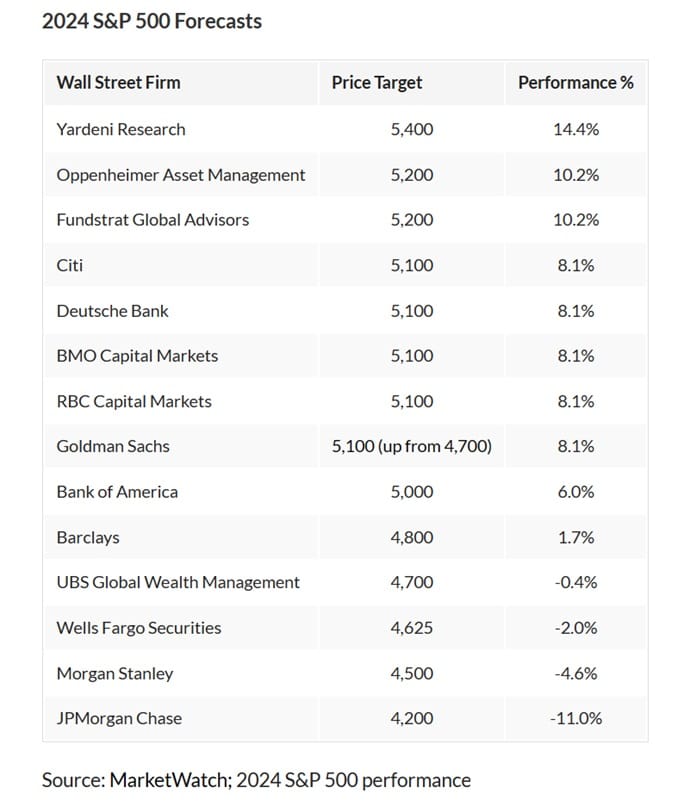
What is a stock market prediction worth today? Let’s look back at Wall Street’s forecast for the S&P in 2024 (we’re at 5600 now).
And here are the forecasts from late 2023. What is your impression of the major banks’ predictive capabilities?
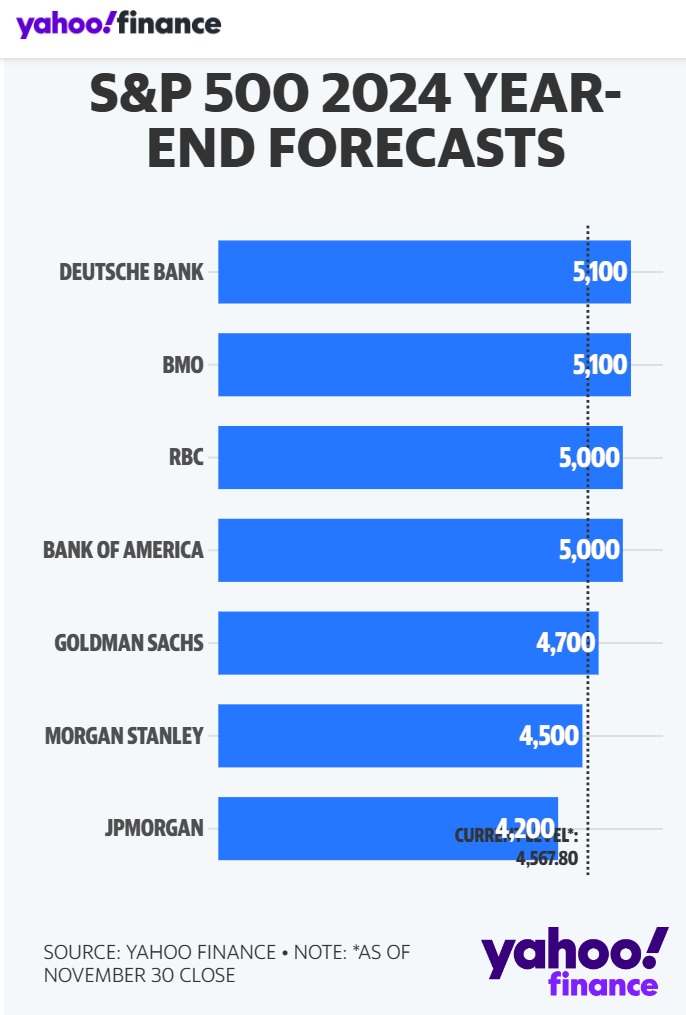
Goldman Sachs Research forecasted the S&P 500 index would end 2024 at 4700, for a 12-month price gain of 5% and a total return of 6% including dividends. We’re far beyond that, which means these companies have a far too fearful outlook that investors are beginning to disrespect.
As you can see, most investment companies are bullish about 2024 with a range of about 8% to 10% for the optimistic, most noted authorities. Of course, we’re well up already two months into the new year and it looks like these will be revised upward as increasing good economic news is reported.
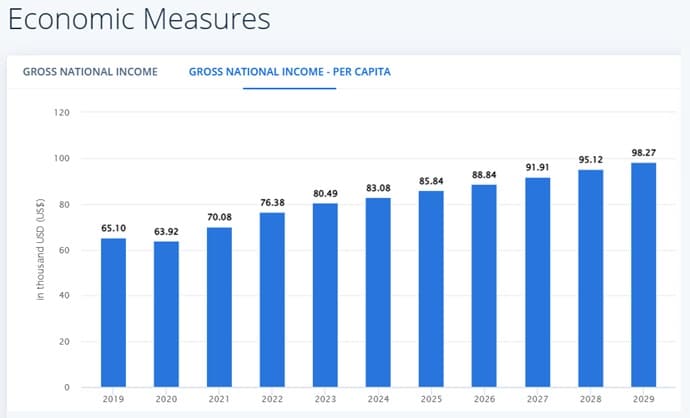
The US economy is in excellent condition. Unemployment is 3.7%, inflation is only 2.8%, income is up 3.4%, consumer spending continues moderately, and US national income is up and forecast to rise continuously to 2029.
Let’s Review why the Stock Market Forecast is so Rosy
- inflation continues to lower
- FED rate cut expected in June/July and a full 1% lower by 2025
- US GDP slowing thus inflation may be past
- US dollar weakens strengthening exports
- $6 to 8 Trillion in money markets could move to equities as interest rates fall
- materials prices on a downward trend (natural gas, oil, lumber)
- innovation and investment in AI contributing to a rebuilding of the economy and a renewing of many products in use (laptops, smartphones, autos)
- investor doubt and insecurity have eased of late given the rally is so persistent, weathering all bad news
- normally sluggish 1st quarter downturn will end in a few months
- China dependence is decreasing with the re-onshoring of manufacturing to the US
- trillions in US infrastructure spending due to start this year
- wages are rising fueling consumer spending
- job growth will be strong due to lower taxes and deregulation in industries
- earnings are slated to increase by an unthreatening 1.3% YoY with topline sales expected to grow by 3.1%
- Presidential election 8 months away with the tax-cutting, deregulating Donald Trump in the lead
- the defeat of the Democrats translates to pro-business policies which gives investors tremendous relief
- Goldman Sachs sees the S&P hitting 7000 by end of 2025
- Chips Act and infrastructure spending should bolster economic growth
After a strong 3 months, the Dow Jones, S&P, Russell 2000 and NASDAQ are gaining speed.
At this point, you’re wondering which sectors are going to boom this spring, and which individual stocks will rocket. Certainly, the Russell 2000 has some hot stocks rocketing right now. The overall trend for the Russell is heading upward yet there are still concerns about the economy.
Hottest Sectors this Week
Perhaps not surprisingly, technology, consumer staples, and communications lead the way. Materials and energy leveled upward but are not expected to do well for the next few months. The Dow was lagging because of poor economic news.

Have a look at the 3-month and 6-month projections for the stock market and collectively you’ll see the bull market horizon is not far off. And view the 5-year forecast for better clarity for the road ahead. Getting a grip on the macro picture is important, and don’t forget that politics is the dictator of markets and they can still throw a monkey wrench into this (high rates, regulations, anti-stimulus spending bills).
Will Fear of Missing Out Also Boost the Stock Markets?
FOMO investors are afraid of losing out and if they start moving all that money from the money markets ($4 to $6 Trillion estimated) then stock prices could rocket. It’s definitely time to own something. You may find the best stocks to buy today, or next week are a basket of large caps, but for those who demand more, the Russell 2000 small caps are likely where you’ll get rich.
“This environment where rates are cooling, inflation is moderating and the Fed is on the sidelines, that is typically a good backdrop for risk assets. Typically when rates start to move lower, you get valuation expansion and the areas that we could see some more meaningful valuation expansion is outside of large-cap tech.” — Mona Mahajan, senior investment strategist at Edward Jones
Interesting stock picks:
Arm Holdings (ARM), United Rentals (URI), Toll Brothers (TOL), D.R. Horton (DHI), TopBuild (BLD), InterContinental Hotels (IHG), Marriott Worldwide (MAR) and Palantir Technologies (PLTR).
AI technology, homebuilders and travel companies are the best stocks to buy. I like DR Horton and Toll Brothers outlook for the next few years. The demand for housing is intense with resale properties unable to be sold with severe shortages (costs, interest rates, materials shortages, lack of government support). As mortgage rates fall, hungry, impatient buyers will jump on new homes available on the market.
When Will all that Money Market Money move over to Equities?
Markets have suffered low volume and disinterest for sometime, yet $5 to 6 Trillion in money markets is one reason to hang in there with your best picks. Not all of that money will move, but a good chunk of it will by end of 2024. If Biden wins, then money will retreat to the money markets.
Year to date, NASDAQ and the S&P 500 have persevered well. As interest rates ease, the NASDAQ was positioned best for growth, which means US tech stocks might be the best bargains. Here are your top-performing tech stocks of late on the NASDAQ exchange. With the coming growth of AI, Nvidia has caught the eye of investors.
Morgan Stanley pointed out in their Stock Market Outlook 2023 report, the stock market does very well in non-election years (+71%), and not badly in Presidential election years (40)%).
6 Month Stock Outlook
By April of 2024, we might be through most of the bad news and economic crisis. The economist’s dour predictions of a 2024 crash/downturn will be done. By then, the Dems will have to capitulate on spending to reduce inflation, and that will drive a massive upward shift in the DOW, S&P, NASDAQ and Russell 2000. See more on the 6 month S&P forecast.
If the FED rate drops and mortgage rates fall, it could stimulate the housing market which fires up everything. There is a crisis in the multifamily sector for overleveraged builders, but those that get through it will see their sales improve by next spring of 2024.
The 5 Year Stock Outlook
For the period 2024 to 2029, we’re looking at impressive growth. This is mostly fueled by lowering interest rates, expanded oil and gas production, bringing manufacturing back to the US, and government spending more in line with reality instead of ideology. The US leadership in AI and microchip manufacturing is key since AI will increasingly influence manufacturing, services and the financial sector. Perhaps even the AI stock market software tools will be useful then. See more on the 5 year market outlook and even check out the 10 year forecast.
Key Market Signals to Watch
Government Debt Crisis and Shutdown: key driver of this current downdraft in stock prices. There will be damage as government credit rating and suppliers are affected after the shutdown. Lower spending means companies will review their risks and their decision to work with the US government going forward.
Lower Bond and Treasury Yields: Right now the FED is sticking it to the equities market due to their desperate search for cash to pay out on debt liabilities. That’s drawn money into the bond market for comparatively weak ROI for investors who want a lot more than a few percent growth. Only equities pay off big and create millionaires. Charles Schwab expects yields to fall in Q3 and into 2024 as inflation continues to cool.
Stock Markets Heading Down: The last 3 months have been strong, but overall support for a strong Q4 is weakening, and Q1 2024 is looking cloudier with rain in the forecast. Yet, after March, investors may the sun shine through.
Regional banks stocks: they’ve seen their stock prices fall strongly last week. The FED noted in its Loan Officer Survey that “Banks reported tighter standards and weaker demand for all commercial real estate loan categories.” Higher for longer interest rates combined with tighter lending standards threaten to slow the economy which relies on credit (real estate).
New Inflation Data: New inflation data released from the Bureau of Labor Statistics showed the (CPI) a 0.3% increase in December to 3.4%, following a 0.1% rise in November. Energy, producer prices and import inflation are consistently negative.
FED Pivot Timing: There is no consensus about the FED easing cycle for 2025. Some believe there will be only one .25% cut in 2025.
Rising Oil and Natural Gas Prices: OPEC looks weak as the US pumps a record 13 million barrels of oil per day, and a very warm winter has led to plummeting natural gas prices. Although middle east wars are causing oil supply fluctuations, it is likely supplies will flow even better in the year ahead, to help keep energy prices down at least for 2024.
Strengthening US Dollar: the US dollar had weakened great but is now on the rise once more (103 dollar index) and that will help foreign investors buy more in the US or invest in fast growing US companies. US exports should enjoy a short period of international trading advantage.
Dow Jones DJI Projections
Currently, for year to date, the Dow Jones is underperforming and Dow Jones stocks are barely up for the year. The economic slowdown, with the rapid rise in credit costs, has stunted manufacturing.
This chart from Barchart (one of the best investing websites to subscribe to) shows few Dow Stocks were thriving despite today’s great rise. However, there will still be a great buy the dip opportunity. Investors should review oil stocks since the price of oil is suppressed. Commodities and energy industry experts believe oil prices will rise — either through OPEC cuts or the depletion of the Special Petroleum Reserve.
What Do the Economists Say about a Recession?
Ethan Harris, head of global economics research at Bank of America Corp. “We’re either going to have a weak economy or a recession.” — TBS News Report
Jamie Dimon of JP Morgan said there’s a 66% likelihood the U.S. is headed into a mild recession or something even worse.
“We put the odds that the economy will suffer a downturn beginning in the next 12 months at one in three with uncomfortable near-even odds of a recession in the next 24 months,” said Moody’s Analytics chief economist Mark Zandi said last May. — Washington Post.
Stock Market Crash Possibilities
There are very few credible market economists who are expecting a crash, although a few believe a downturn in the summer will occur as inflation creeps back up, and the FED responds with a hike. The FED may not hold rates where they are if inflation does pick up by June. It’s sufficient to keep the FED out of the markets and let laisses faire take hold, to the degree it’s currently allowed.
Here’s 7 Factors to Watch as Signals of a Downturn
- inflation persists or rises (wages, energy, consumer prices, rent)
- trade war deepens with all sides refusing to ease their US tariffs and other trade restrictions on the US
- government keeps spending as tax revenues decline (severe cut backs would be needed)
- Interest rates rise (could go up further)
- disappointing earnings in Q1
- consumers losing confidence and pulling back spending fast in Q2
- geopolitical conflict such as China/Russia strife (that will intensify)
- regional bank crashes (believed to be done, but some concerns remain)
- oil price shocks (yes, oil prices are rising fast with supply down and oil sanctions enforced)
What’s the Long-Term Investment Outlook?
The 10 year stock market outlook is less certain of course, but consider that Millennials and Gen Z’s will slowly form more families and this is a massive number of people and a high spending phase of their lives. Additionally, millions of illegal immigrants flooding into the country in their 20’s to 40’s represent additional market demand. Demand drives prices and economic growth which fuels growth for many of the stocks above.
It is a wild period of volatility, conflict, struggle and optimism in the US this year. A year of massive change for the United States. President Trump’s strong stance on pro-American growth sends the message that China is no longer the place to invest in. This continues to anger many hedge fund managers, political groups, bankers and global trade activists who parked their fortunes in China.
But all signals point to the US being the place to invest, and that Trump actually has this agenda figured out.
See more posts on stock market and investment topics.