
How to Buy a House During a Recession
Tens of thousands of prospective homeowners are asking a common question right now, “is this economic and real estate market lull the best time to buy a house or condo?”
It depends, of course, on where you hope to buy. Some states and cities are suffering economically and may not recover quickly. But overall, when prices fall as they have in some cities/states (e.g. Florida or California), property investors and first-time buyers are thinking this might be the right time to buy.
With home prices falling, many sellers are on the desperate side, even willing to give up on their dream price and agree to concessions. Reduced buyer demand means that houses may stay on the market longer, (days on market are increasing) which encourages sellers to lower their expectations.
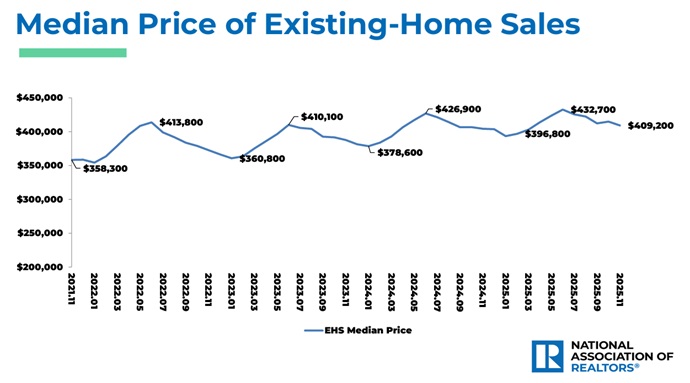
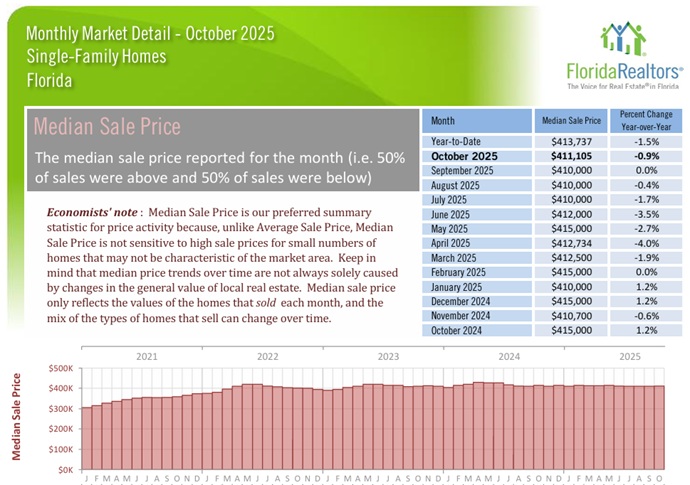
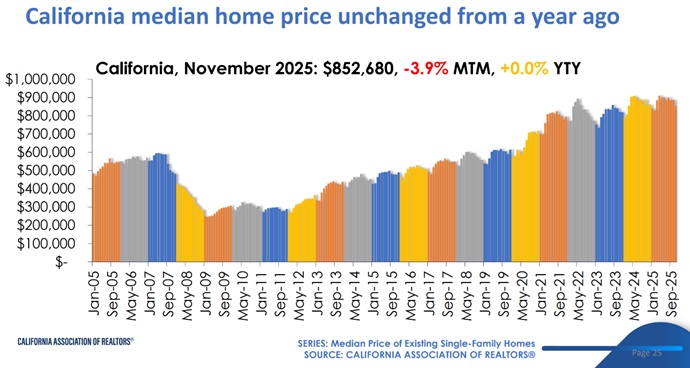
And this means housing market downturns give you and your Realtor a chance to negotiate a lower price with better terms.
A Stronger US Economy is Inevitable
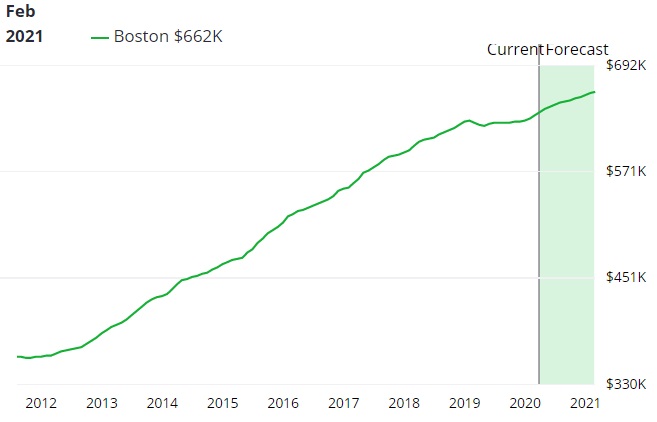
This lull in the housing market might be short-lived, perhaps for the next 6 months. And if the Trump pro-USA economy does finally take wing in 2026, you can be sure sellers will resume their ask for top dollar. The national, Florida and California home price charts show us moderation in prices, but there doesn’t seem to be a steep trend downward. But you can certainly create a subtle “downturn” narrative with sellers, citing evidence of a sagging 2026 housing market.
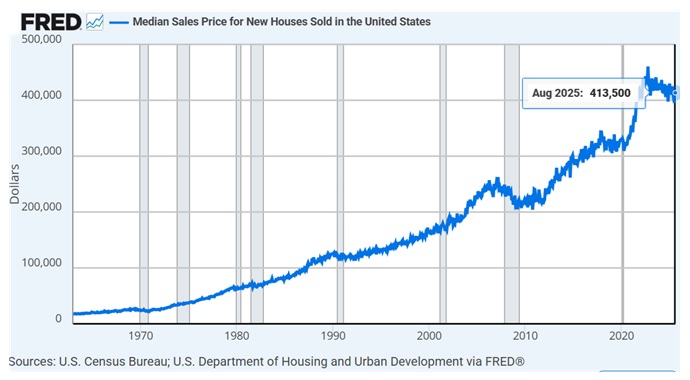
And the FRED St Louis Fed chart above shows new home price trend with a stronger moderation at we close out 2025. Will it sink below $400k? Lawrence Yun, chief economist at the National Association of REALTORS®, is forecasting a 14% nationwide increase in home sales for 2026. He says, “Home prices nationwide are in no danger of declining.” NAR expects prices to climb 4% in 2026, supported by job growth and persistent supply shortages. And mortgage rates appear to be heading downward next year, so more buyers will be purchase-minded.
It might be wise to act fast, using the 10-step plan in this post, to give you the best buying positioning.
Any drop in home prices might be short lived then, as we move into spring 2026 and a stronger summer buying season. Therefore, if your own wealth, credit, and job outlook is positive, this might indeed be the right time to buy a house. Still, this is a major financial decision, so you’ll want to ensure you have all your ducks in a row, and are well prepared to make a purchase and assume a big mortgage payment.
Be shark-minded: And the best homes to buy are those that:
- have been on the market for several months and have had a series of price reductions.
- are empty which suggests the seller has moved and might be holding two mortgages.
Search hard for situations where sellers might sell quick or be willing to negotiate.
10 steps to Buy a House During an Economic Lull
1) Start with a “financial stability test,” not a Dream Home List
In a recession or slowdown, the biggest risk is income disruption. Right now, you need to stress-test your budget assuming:
- a temporary drop in household income, and/or layoff might happen
- a higher “all-in” monthly housing costs than you expect (utilities, insurance, repairs) along with inflation could make lengthy “house poor” a painful reality.
2) Use Real Market Data (best neighborhood + property type)
Home inventory, pricing pressure, and bargaining power vary wildly by metro and even zip code. Use NAR research to understand what’s happening in the broader market, then narrow to your local conditions (months of supply, price trends, time on market). Ask your preferred Realtor to create a report for you in your preferred city.
3) Set a Hard Affordability Ceiling using Debt Ratios and “all-in” Costs
A simple guardrail many lenders reference is keeping housing and total debt at manageable levels (often discussed as front-end/back-end ratios). Treat these as a ceiling, not a target, and include:
- principal + interest
- property taxes
- homeowners insurance
- condo/HOA fees
- conservative maintenance reserves
A plain-language explainer of debt-to-income thinking is helpful here. U.S. Bank
4) Get Pre-approved for a Mortgage, but make it “recession-grade”
Ask your banker or mortgage lender for a pre-approval that reflects:
- verified income/assets (not just “pre-qual”)
- realistic property taxes/insurance
- conservative DTI assumptions
In a softer economy, underwriting and job verification will be stricter, however this will make your offer more credible to sellers who don’t want the friction of disappointments.
5) Shop Home Loan options like a Pro: Source Many Mortgage Offers
This is one of the best-ROI actions you can take.
6) Compare Lenders on the Costs that Actually Vary—then Negotiate
When you have multiple Loan Estimates, focus on the line items the CFPB highlights as most lender-dependent (origination charges, certain services, and lender credits). That’s where comparison and negotiation are most effective. Consumer Financial Protection Bureau
7) Decide your Rate-Risk Plan early (floating/variable vs locked)
In volatile periods, rates can swing. A locked rates keeps your rate from changing between offer and closing as long as you close within the lock period and your application doesn’t materially change. Practical takeaway: don’t “wing it.” Know (a) when you’d lock, (b) lock duration, and (c) what triggers a re-price.
8) Explore Recession-Friendly Programs
If you’re qualified for a mortgage, yet need a big cash down payment, check:
- FHA: HUD notes down payments can be as low as 3.5% (program rules apply).
- Conventional low-down options: Fannie Mae’s HomeReady is designed for eligible low-income borrowers and has defined underwriting rules and documentation options. Even if you don’t use these, knowing them helps you avoid assuming you “need 20% down.”
9) Consider using a HUD-approved Housing Counselor as your Risk-Management Backstop
HUD maintains a way to find HUD-approved housing counseling resources (often low-cost or free) that can review budgets, readiness, and loan terms.
10) Make Offers that Protect You: Property Inspection, Financing, and have a Clean “plan B”
In downturns, the temptation is to waive protections to “win.” The smarter move is to:
- keep an inspection pathway (or very tight inspection strategy),
- avoid stretching beyond your proven payment comfort.
- maintain a post-close cash buffer for repairs and job surprises.
Also, before you finalize, do a final “terms audit”: verify the Closing Disclosure matches what you accepted on the Loan Estimate shopping path (the CFPB’s Loan Estimate/Disclosure framework exists specifically to prevent unpleasant surprises).
How to Buy a House in a Downturn?
As you now understand, it’s about preparation, certainty of liabilities, staying within your limits, and hunting for the best bargains like a shark.
Home sellers have been holding out for their dream price for a long time, and generally, they’ve been getting it. They’re still emboldened by the lack of housing, which means buyers are overpaying for overvalued listings and getting stuck with high rate mortgages.
Don’t buy into the idea that you must buy soon. This is a project requiring patience and constant conversations with your Realtor. A good Realtor is money in the bank and will help guide you through the whole process. All you need to do is create hard limits for both yourself and them. With those clear guidelines, you’ll work better, in focus to get the kind of deal and home you’re dreaming of.
See more on the US national housing market forecast, Florida housing market forecast, and the effects of tariffs on the housing market.