
How to Increase Your Real Estate Lead Conversion Rates
15 Factors That Turn Buyers and Sellers Into Your New Clients
You’ve likely purchased leads from Zillow or Realtor.com or another lead generation company, followed up on the referrals, or received a word of mouth inquiry from someone considering selling their home.
The prospect appeared promising. They had a genuine real estate need, seemed financially capable, and your services appear to be a good fit. But somehow, the lead fell through gaps in your conversion process. And that’s the way you have to look at it. How you handle leads online or off, is the key driver of your business success. When you’ve worked in the real estate SEO industry for decades, you get to see low conversion rates. The problem there is the task of matching the prospect to your brand identity, and remedy the issue of your site not having the properties they want.
Buyers are practical. They want to see a specific home, or a sizable selection of relevant homes for sale. Some will check you out online and then call you to discuss listings, and try to decide whether to work with you to find their next home.
Understanding the Keys to Converting Leads
So that’s the real challenge of real estate lead conversion. Accepting a name, email address, phone number, or property inquiry is only the beginning. You must turn that interested prospect into someone who trusts you enough to handle one of their biggest financial decisions. And that decision increasingly involves more than a friendly phone call or a good sales presentation.
Buyers and sellers may discover you through Zillow, Realtor.com, referrals, Google, social media, or an open house. They might never arrive on your website before contacting you, however, to decide on whether you’re the right agent, they’ll often want to investigate your professional reputation, experience, specialization, and previous results — your Realtor brand image and your content will reassure them.
Your website, professional brand, reputation, and first conversations must work together to make choosing you feel like the right decision.
Let’s examine what really converts buyer and seller leads into clients, and how you can improve your conversion rates without continually spending more on lead generation.
What Is Real Estate Lead Conversion?
Real estate lead conversion is the process of turning a prospective buyer or seller into an engaged, qualified client and ultimately a completed real estate transaction.
It involves several distinct stages:
Lead → Contact → Qualified Prospect → Consultation → Client Agreement → Completed Transaction → Referral or Repeat Client
Each transition presents an opportunity to win or lose business.
A buyer might respond to your first message but never schedule a consultation. A seller might request a property valuation but choose another agent after comparing marketing strategies. That’s why optimizing your lead conversion rate means improving the entire client acquisition process—not simply getting more people to complete online forms.
Quick answer: How do Realtors convert more leads?
The most effective approach combines five capabilities:
- Respond promptly and personally to inquiries.
- Identify the buyer’s or seller’s actual needs, motivation, and readiness.
- Demonstrate trustworthy local expertise and relevant specialization.
- Provide convincing evidence of your professional competence.
- Make the next step easy, helpful, and appropriate to the prospect’s situation.
Your content marketing, website, and branding should support those activities, not replace them.
What Makes Buyers and Sellers Choose a Real Estate Agent?
Recent consumer research offers useful insights into why prospects decide to hire particular agents. According to Zillow’s 2026 Consumer Housing Trends Report for buyers, the top primary reasons for selecting an agent were:
| Primary reason for choosing an agent | Buyers |
|---|---|
| Local expertise and community reputation | 38% |
| Specialized skills and relevant experience | 33% |
| Personality, rapport, and trust | 22% |
| Superior technology and tools | 7% |
Local knowledge and specialization accounted for the majority of primary reasons buyers gave.
Seller research reveals a similarly compelling pattern.
Zillow’s 2026 seller research found these characteristics were rated very or extremely important:
| Agent selection characteristic | Sellers |
|---|---|
| Trustworthy first impression | 80% |
| Responsiveness | 77% |
| Local market and neighborhood knowledge | 75% |
| Positive community reputation | 74% |
| Strong recent sales history | 69% |
| Online reviews and ratings | 62% |
These percentages measure importance ratings, not mutually exclusive reasons for choosing an agent.
This research suggests something important for real estate marketing.
The biggest opportunity isn’t necessarily generating greater excitement about buying or selling a home. It’s giving people stronger reasons to believe you’re the right professional to help them.
The Top 15 Real Estate Lead Conversion Factors
These are my recommended priorities for independent agents and real estate teams. The ranking is an editorial framework informed by consumer research and the practical lead conversion process—not a statistically established ranking of conversion lift.
| Rank | Conversion factor | What to improve |
|---|---|---|
| 1 | Trust and reputation | Make professional credibility immediately apparent |
| 2 | Relevant specialization | Prove your suitability for this buyer or seller |
| 3 | Demonstrated competence | Show credible results and successful client work |
| 4 | Response speed and quality | Make prompt, relevant personal contact |
| 5 | Understanding client motivation | Learn what the prospect really needs |
| 6 | Local market knowledge | Demonstrate specific neighborhood expertise |
| 7 | Lead quality and buying/selling intent | Distinguish serious prospects from early researchers |
| 8 | Personal compatibility | Build confidence, rapport, and communication comfort |
| 9 | Website credibility | Create an excellent professional verification experience |
| 10 | Clear service proposition | Explain what makes your representation valuable |
| 11 | Relevant next-step offer | Give prospects a compelling reason to meet |
| 12 | Reviews and social proof | Provide credible independent recommendations |
| 13 | Helpful follow-up | Continue building confidence without applying pressure |
| 14 | Transparency and accessibility | Explain your process, obligations, and communication |
| 15 | CRM and conversion measurement | Identify exactly where potential clients are lost |
The first three factors deserve particular attention because they influence the prospect’s underlying belief that hiring you will produce a better outcome.
1. Build Trust Before Asking for Commitment
Home buyers fear making expensive mistakes, overlooking problems, overpaying, or becoming trapped in an unsuitable property.
Sellers fear pricing their homes incorrectly, losing negotiating power, experiencing long delays, or failing to achieve the best realistic sale price.
Trust means convincing them you understand those risks and will represent their interests.
Trust grows from consistent evidence: your professional history, real client experiences, market knowledge, realistic recommendations, and the way you respond to questions.
A sophisticated-looking website can create a favorable first impression. But evidence of trustworthy behavior makes that impression believable.
2. Prove That You Specialize in Their Needs
Being a competent Realtor isn’t necessarily enough.
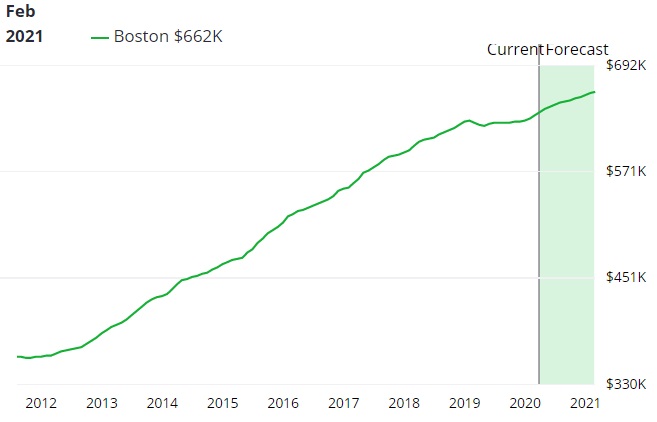
A first-time condominium buyer in Boston has different concerns from an experienced homeowner selling an upscale property in San Diego.
One needs patient guidance through financing, condominium documents, inspections, and purchase decisions. The other may be focused on premium positioning, qualified buyers, pricing strategy, confidentiality, and negotiation.
Agents who specialize can communicate a more compelling value proposition.
Demonstrate your competence in relevant areas such as:
- First-time home purchases.
- Luxury property marketing.
- Waterfront homes and condominiums.
- Downsizing and retirement transitions.
- Relocation buyers.
- Investment properties.
- Specific neighborhoods or communities.
Specialization need not mean excluding other clients. It means showing precisely where your expertise is especially valuable.
3. Show Evidence That You Can Deliver Results
Many agent websites feature attractive photographs, enthusiastic promises, and statements about exceptional service.
Far fewer explain how the agent actually creates value. Your strongest conversion assets may be case studies demonstrating how you evaluated market conditions, solved problems, negotiated effectively, or successfully guided clients through difficult decisions.
For example:
Seller case study: Describe the property’s pricing challenge, your preparation recommendations, marketing approach, buyer feedback, negotiations, and documented outcome.
Buyer case study: Explain how you identified an overlooked property issue, helped compare alternatives, evaluated price, or managed a complicated transaction.
Make the examples factual, obtain appropriate permissions, protect confidential information, and avoid implying that past results guarantee future outcomes.
Evidence of competence is more persuasive than a general promise of excellent service.
4. Respond Quickly—but Make the Response Worth Receiving
Rapid response matters, particularly for property inquiries and buyers requesting showings.
However, a fast generic message is not necessarily a good response.
Consider these two approaches.
Generic response: “Thanks for your inquiry. When are you looking to buy?”
More relevant response: “Thanks for your interest in the property on Oak Street. I can help you check its current status and explore whether it fits what you’re looking for. Is location, price, or timing your biggest priority?”
The second response acknowledges the inquiry and offers a useful next step.
Use automated notifications to avoid missed leads, but personalize the actual conversation whenever possible.
Ask people how they prefer to communicate. Confirm contact permissions, respect opt-outs, and comply with applicable telemarketing and privacy requirements.
5. Discover What’s Actually Motivating the Prospect
A property inquiry isn’t necessarily a buying decision.
A home valuation request isn’t necessarily a decision to sell. Your job is to learn why the prospect is considering a transaction, what they’re trying to accomplish, what worries them, and what could prevent them from moving forward.
Useful discovery questions include:
- What prompted you to start considering a move?
- What outcome matters most to you?
- Is there a particular timeframe you’re working toward?
- Have you already spoken with another agent?
- What’s the biggest uncertainty you need resolved?
A thoughtful conversation provides the information needed to make your recommendations relevant.
6. Demonstrate Genuine Local Market Expertise
Buyers can find listings, price histories, neighborhood information, and general market forecasts online.
Your advantage is helping them interpret that information. A skilled agent understands the difference between two similar neighborhoods, why some listings attract strong offers, which property characteristics influence resale demand, and where risks may be underestimated.
Sellers want to know how their particular property competes against alternatives. Create market explanations that connect local conditions to actual buyer and seller decisions.
This content helps establish you as a professional who can interpret the market, rather than simply repeat housing statistics.
7. Understand the Intent Behind Every Lead Source
Not all real estate leads are equally qualified. Buyer intent is relevant in any sales sector whether travel, professional services, or real estate. Their behavior helps you understand the underlying intent. A person requesting an immediate showing is different from someone downloading a market report or appearing on a predictive seller prospect list.
You should never use one generic sales process for every lead source.
| Lead source | What the inquiry may indicate | Appropriate conversion approach |
|---|---|---|
| Zillow Premier Agent / Realtor.com inquiries | Interest in a particular property or market | Verify the inquiry, answer questions, clarify needs, offer a relevant consultation or showing |
| Agent Pronto or professional referral | A person who has requested agent assistance | Establish fit, acknowledge the referral, offer a conversation |
| Google Search / local SEO | Active research into a service, neighborhood, or agent | Address the exact question and demonstrate expertise |
| Facebook / Instagram advertising | Interest stimulated by an offer or content | Clarify motivation and readiness before pursuing commitment |
| Open houses | Interest in a home or neighborhood | Provide helpful property information and ask permission to follow up |
| Expired listing / FSBO data such as REDX | A homeowner with a known property-related situation | Use respectful, compliant outreach and offer a substantive alternative strategy |
| Predictive targeting such as Offrs or SmartZip | A household identified by a statistical model | Build awareness; don’t assume the homeowner has requested service or intends to sell |
| Past-client and personal referrals | Existing confidence or transferred trust | Reinforce the relationship, clarify current needs, and demonstrate continued relevance |
Some companies sell consumer inquiries, others provide referrals, advertising systems, CRM software, or prospecting data.
These are not interchangeable sources of ready-to-hire clients.
For a detailed comparison of providers and systems, see my guide to 20 real estate lead generation companies and sources.
8. Make Personal Compatibility Part of the Experience
Buyers and sellers want competent representation, but they must also feel comfortable working with their agent.
They need to believe you’ll listen, communicate effectively, explain difficult issues, and remain committed throughout the transaction. Professionalism need not mean being formal or distant. A warm, confident, responsive manner can make your expertise easier to trust.
All buyers and sellers have preferences about who they feel comfortable with but most are reasonable about that. If you come across as unassuming, professional, caring, courteous and trustworthy, this image of you could change their preference. In each case, you have a chance to project a reputation and professional demeanor that impresses them. You become a better choice to the vague “prefered Realtor” image they have in their mind.
The objective isn’t to appear likable to everyone. It’s to let suitable prospects recognize that working with you would be productive, respectful, and comfortable.
9. Turn Your Website Into a Credibility Verification Center
This is one of the most overlooked aspects of real estate lead conversion.
A prospect might discover you through a referral, property portal, or online advertisement, then search for your name. Your website may be visited after the initial lead has been generated but before the agent selection decision is made.
The website should answer:
- Who is this agent, and are they legitimate?
- What neighborhoods and property types do they know?
- Have they successfully handled transactions like mine?
- What do previous clients say about their experience?
- What does this agent actually do for buyers or sellers?
- Will they communicate clearly and treat me fairly?
- How do I arrange a useful first conversation?
Your home page, About page, client reviews, service pages, local content, and contact information should create one consistent impression. Avoid intrusive registration requirements, exaggerated claims, outdated transaction histories, or website features that obstruct visitors from learning about you.
Your site doesn’t need to be the fanciest real estate website in the market. It needs to be credible, informative, trustworthy, and convincing.
10. Create a More Compelling Real Estate Value Proposition
Many agents use nearly identical marketing language: integrity, dedication, local expertise, exceptional service. You may even use templated promotional pieces in your social media, with templated messages. By not having a unique style or message, they view you as a standard, easily forgettable salesperson. Your Realtor brand identity needs some research, thought and design.
A stronger value proposition identifies the people you serve, the problems you understand, and how your approach helps produce better decisions.
For example:
“I help homeowners in established San Diego neighborhoods prepare, price, and market their properties using local buyer-demand analysis and a carefully planned launch strategy.”
This is more specific than promising exceptional customer service.
The best value propositions can be demonstrated through real processes, client experiences, and documented outcomes.
11. Offer a Relevant Next Step
Conversion improves when prospects understand what they’re being invited to do and why it would help.
A buyer may appreciate a neighborhood comparison, a realistic purchasing-cost discussion, or a strategy consultation.
A seller might prefer a comparative market analysis, a property preparation review, or an explanation of how competing listings could influence their selling price.
Make the invitation clear, manageable, and relevant.
Your first conversion goal should usually be a meaningful conversation—not an immediate demand for a long-term commitment.
12. Make Reviews and Testimonials More Convincing
Reviews help prospects evaluate what working with you might actually be like.
However, the wording of those reviews can be more important than simply accumulating positive ratings. A testimonial describing your negotiation skills, patience, market knowledge, or management of a difficult situation provides more meaningful evidence than a generic five-star endorsement. Feature authentic client feedback prominently, maintain accurate third-party profiles, and invite clients to share genuine experiences.
Never fabricate reviews, condition incentives on positive ratings, or misrepresent transaction outcomes.
13. Develop a Helpful Follow-Up System
Many real estate leads are not ready to transact immediately.
Buyers may need financing, a job decision, or time to find the right property.
Sellers may be waiting on a purchase, a family transition, or more favorable market conditions.
Create follow-up communications that reflect these realities.
Instead of repeatedly asking whether someone is ready to buy or sell, provide relevant assistance:
- Buyer-specific listing and neighborhood updates.
- Market changes affecting their preferred price range.
- Seller pricing and competing-inventory updates.
- Explanations of financing or transaction processes.
- Useful answers to questions raised during earlier conversations.
A CRM can schedule and monitor this work. It cannot replace judgment, empathy, or personal knowledge of the client.
14. Reduce Uncertainty With Transparent Communication
Trust grows when agents explain the process clearly.
- Describe how you handle buyer representation, seller marketing, communication, negotiations, and transaction milestones.
- Explain compensation and representation agreements before asking prospects to make commitments.
For U.S. MLS participants working with buyers, applicable written buyer agreement requirements should be addressed before covered home tours. Local laws and brokerage requirements also apply.
Transparency reduces the fear that a prospect is entering a relationship they don’t fully understand.
15. Measure Lead Conversion at Every Stage
A real estate team might purchase 200 leads, obtain 80 conversations, book 25 consultations, and eventually close eight transactions.
Another team could purchase the same number of leads and close twelve transactions because its follow-up, qualification, trust-building, and client onboarding processes work better. Hopefully, your CRM offers a robust lead scoring system.
You need to know where the difference occurs.
- Measure outcomes by lead source and by buyer versus seller.
- Track how many prospects were contacted, qualified, met with, signed, and converted into completed transactions.
- Document why opportunities were lost.
Improvement begins when you can identify where uncertainty, weak fit, missed follow-up, or inadequate proof is costing business.
How to Convert Buyer Leads Into Clients
Buyers want more than access to available listings.
They need confidence in their purchasing strategy and in the professional helping them make difficult decisions.
A successful buyer conversion process has five stages.
| Stage | What the agent needs to accomplish |
|---|---|
| Initial contact | Respond to the specific inquiry and establish communication preferences |
| Discovery | Understand location, budget, financing, needs, and timing |
| Demonstration | Show local expertise, property evaluation skills, and understanding of risks |
| Consultation | Establish a practical property search and purchasing strategy |
| Commitment | Explain representation, services, compensation, and the next steps |
A useful first response to a buyer:
“Thanks for reaching out about the property. I’d be glad to help you learn more about it. Before we look at possible next steps, are you primarily interested in that particular home, or are you comparing several properties in the area? I can help you evaluate the choices and current market conditions.”
Don’t immediately overwhelm the buyer with dozens of listings or generic promotional emails. Find out what decision they’re trying to make. Then demonstrate how your experience will help them make it more confidently.
How to Convert Seller Leads Into Listings
Seller lead conversion is different. The homeowner may be considering several options: sell immediately, renovate, rent the property, delay the sale, or simply investigate its current value. A serious seller often wants convincing answers to three questions:
- What is my property realistically worth?
- How will you attract qualified buyers?
- Can you achieve the outcome I need within my timeframe?
Zillow’s 2026 seller survey found that maximizing profit remained the leading seller priority at 52%, followed by selling within a target timeframe at 36%.
Your conversion process should address those priorities.
| Stage | What the agent should demonstrate |
|---|---|
| Initial contact | Understand the homeowner’s reason for considering a sale |
| Property assessment | Explain relevant comparable sales, competition, and property characteristics |
| Marketing strategy | Demonstrate how the property will be prepared and exposed to suitable buyers |
| Performance evidence | Show relevant selling experience and problem-solving examples |
| Listing consultation | Present pricing choices, a marketing plan, expected costs, and a realistic timeline |
A useful first response to a seller:
“Thanks for requesting information about your home’s value. I’d be happy to help you understand the current market for properties like yours. Online estimates can be useful starting points, but the property’s condition and recent comparable sales matter. Are you considering a move soon, or are you exploring your options?“
This creates a consultation opportunity without demanding that the homeowner commit to selling.
For sellers, a credible marketing plan and realistic pricing rationale can be far more persuasive than a promise to achieve an extraordinary sale price.
Your 30-Day Real Estate Lead Conversion Improvement Plan
Here is a practical assessment you can use with your current lead generation program.
Score each item from 0 to 2:
- 0 = Not addressed
- 1 = Partially addressed
- 2 = Consistently implemented
| Conversion capability | Your score |
|---|---|
| Prompt lead notification and response | /2 |
| Source-specific follow-up messages | /2 |
| Buyer and seller qualification questions | /2 |
| Clear local specialization | /2 |
| Credible case studies and transaction examples | /2 |
| Recent authentic reviews | /2 |
| Strong professional website and About page | /2 |
| Relevant buyer and seller consultation offers | /2 |
| CRM follow-up and opportunity tracking | /2 |
| Lead-to-client conversion reporting by source | /2 |
| Total conversion readiness score | /20 |
This is a self-assessment, not a validated industry benchmark.
In the first week, review your incoming leads and measure how quickly and effectively they’re contacted.
In the second week, improve your professional website, credentials, case studies, and review presentation.
During the third week, develop distinct buyer and seller conversations, qualification questions, and consultation offers.
In the fourth week, review your conversion numbers and identify the most significant losses in your pipeline.
You don’t need to change every part of your marketing program at once. Start with the problem that appears to be costing you the most promising clients.
What Is a Good Real Estate Lead Conversion Rate?
There’s no single reliable conversion rate that applies to all real estate leads. A high conversion rate means you do this well and aren’t wasting your precious time. That competence is usually noted by buyers and sellers too. Your skill is proof of your conversion rate — working for them.
The conversion rate will differ according to the source, prospect intent, market conditions, agent experience, competition, qualification standards, and the conversion stage being measured. A personal referral from someone ready to sell and a predictive prospecting record are fundamentally different opportunities.
Define your conversion rate carefully.
Lead-to-client conversion rate = (New clients signed ÷ Valid leads received) × 100
Lead-to-transaction conversion rate = (Closed transactions ÷ Valid leads received) × 100
For example:
| Metric | Example |
|---|---|
| Valid buyer and seller leads | 200 |
| Signed clients | 20 |
| Lead-to-client conversion rate | 10% |
| Completed transactions attributable to the lead cohort | 12 |
| Lead-to-transaction conversion rate | 6% |
Illustrative numbers only, not industry averages. Transactions may close months after the leads were originally generated.
Track the original lead cohort so that delayed closings don’t distort the result.
And remember: improving conversion from 3% to 5% across 200 comparable leads represents four additional transactions without needing additional lead volume. That’s why lead conversion improvement can be so financially valuable and help you understand what works in your marketing and sales nurturing.
How AI Can Help Realtors Convert More Leads
AI is becoming part of the real estate customer’s own research and decision process.
Zillow’s October 2026 buyer research found that AI search is being used for homebuying education, market analysis, property discovery, and transaction questions. Your prospective clients may already have asked ChatGPT or another AI assistant how to evaluate a Realtor, compare neighborhoods, price their home, or negotiate a purchase.
That changes the knowledge and credibility expectations agents must meet.
AI can also help agents improve their own conversion process by:
- Categorizing and summarizing inquiries.
- Identifying unanswered prospect questions.
- Preparing personalized follow-up drafts.
- Organizing market research for agent verification.
- Analyzing CRM pipeline patterns.
- Comparing outcomes across different lead sources.
- Identifying content needed to resolve common buyer and seller concerns.
But AI-generated information must be verified. Property availability, pricing, legal obligations, and personal client circumstances require particular care.
Note: Avoid putting confidential client information into tools without appropriate safeguards and authorization. Protecting agency data is essential, and likely you’ll need to review several safety checks to ensure AI doesn’t leak that info out.
AI should make your professional knowledge easier to access and communicate. It should not replace the judgment that makes your representation valuable.
Frequently Asked Questions About Real Estate Lead Conversion
How do you convert real estate leads into clients?
Respond promptly, identify the prospect’s motivation, establish trust, demonstrate relevant experience, offer a useful consultation, and follow up according to their needs and communication preferences. Track each stage to identify where opportunities are lost.
How can Realtors convert Zillow and Realtor.com leads?
Begin with the specific property inquiry. Verify the property’s current status, understand the buyer’s needs, and offer a relevant next step. Demonstrate your expertise beyond simply providing listing information, and don’t assume every inquiry is a ready-to-buy client.
How do you convert real estate seller leads?
Understand why the homeowner is considering selling, assess their timeline, and provide credible information about local pricing, competition, preparation, and marketing. Show how your experience can help them manage risk and achieve a realistic selling outcome.
Do real estate agent websites improve lead conversion?
They can. A professional website helps prospects evaluate an agent’s identity, expertise, reputation, services, and previous results. Its value extends beyond capturing organic search traffic: it can support agent selection after someone discovers the professional elsewhere.
How long should an agent follow up with a real estate lead?
Follow-up duration should reflect the prospect’s readiness, original inquiry, stated preferences, and applicable consent requirements. A near-term buyer may need immediate coordination. An early-stage seller may appreciate occasional relevant market updates over several months. Respect requests to stop contact.
Why are my real estate leads not converting?
Common causes include poor lead quality, weak intent, missed inquiries, generic follow-up, inadequate qualification, insufficient evidence of competence, an unconvincing professional presence, and unclear next steps. Review CRM records by source to determine which factors are actually limiting your results.
The Most Important Real Estate Lead Conversion Principle
Real estate lead generation companies can connect you with prospective buyers and sellers.
However, they can’t manufacture trust in your specific professional abilities, nor can they prove you understand a particular neighborhood, negotiate with homeowners well, or will represent a client’s interests effectively. And they fear losing an opportunity.
Those are things you must demonstrate to build trust and recognition of your skills. Your reputation, specialization, client relationships, marketing content, and professional website should create a consistent picture of who you are and what makes your services valuable.
And when a qualified buyer or seller finally speaks with you, that impression needs to be confirmed through genuine listening, sound advice, and a practical plan.
The best real estate lead conversion strategy is to make the decision to hire you easier, safer, and more convincing.
Improve Your Real Estate Marketing and Lead Conversion
If you’re investing in real estate lead generation but aren’t getting the client and transaction results you expected, your next priority may not be purchasing more leads. It may be improving how your existing marketing, reputation, website, and follow-up processes work together.
I’m Gord Collins, a digital marketing and content strategist. I help businesses examine how their digital presence, marketing messages, and customer experiences influence business results.
Start by looking at your highest-value lead sources, where prospects are dropping out, and how convincingly you’re demonstrating your professional value.
Better lead conversion begins with better understanding.
Research references