
Stock Market Experts’ Forecasts: Who’s Right About 2027?
Updated October 31, 2026: Stock market expert analysts can have an impact on the market. Many of them guide or manage massive funds and draw on extensive experience and access to deep market data and insights that investors don’t have. They also appear on financial news TV and social media, delivering their views to hundreds of millions of investors across the globe.
That is powerful.
Tom Lee, Mike Wilson, Ed Yardeni, David Kostin and other leading Wall Street strategists offer competing views of the stock market’s future. What can their predictions tell investors about 2027—and which forecasts deserve our confidence?
While one of the many stock market experts who appear on CNBC, Bloomberg or Schwab make strong rally predictions, other analysts warn of coming corrections, even doomsday outlooks. There are contradictions here, and their ranking in terms of bullishness could vacillate, where the most bullish retreate to a more cautious outlook, and the cautious make bold upside projections.
When the stock market experts change their views or miss their prediction numbers, can we ever believe them again? Yet, these are bright, experienced and data-enabled professionals. There’s no doubt they’re beginning to influenced themselves by AI predictive algorithms and this can help them improve their stock market projections.
Stock investors need to ask these bold questions about legitimacy, especially, as their predictive performance is never displayed publicly, by their companies or by the media. It’s because they are the media superstars and their reputations as reliable analysts and forecasters have to be maintained.
When Markets Shift and Politics Determines Outcomes
When the economy, political struggles and corporate earning reports start to shift and sway, even the stock market experts below struggle to predict the future. Artificial intelligence has created extraordinary investment opportunities, but the cost of building the AI economy has become a growing concern. Oil prices, inflation, Federal Reserve policy and geopolitical risks are complicating the outlook.
On October 30, the S&P 500 closed at 7,580.07, while the Nasdaq Composite suffered a 2.86% daily decline. The technology selloff reflected mounting concerns about AI investment spending and whether the enormous capital commitments would produce sufficient returns.
For investors, this is where expert forecasts become particularly interesting. I enjoy listening to their forecasts for the next week. Some strategists such as Tom Lee are surprised at the strength of this recent selloff but still view it as a buying opportunity ahead of another rally going into 2027. Others believe the market is still overlooking serious financial, political and economic risks.
Often, they aren’t only disagreeing about the next market level. They’re disagreeing about what will drive corporate profits, investor confidence and stock valuations over the next several years.
Enjoy this review of some of the predictions of leading stock market experts, what supports their views, what could prove them wrong, and how retail investors can use this post’s discussions to make better investment decisions.
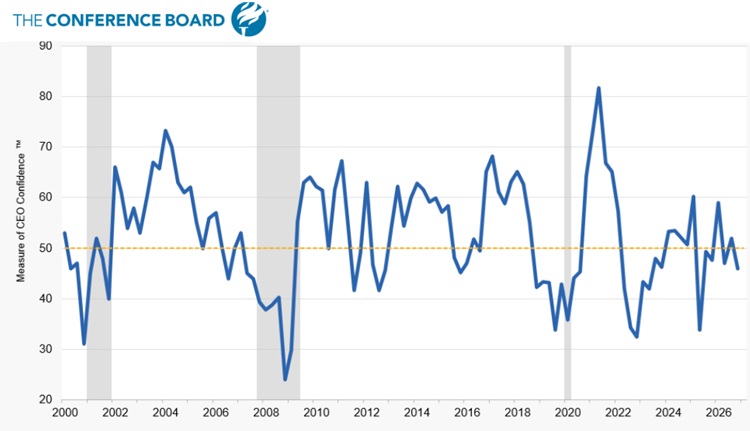
Before we look at their views, let’s see what US CEOs (the people running listed companies) think about the outlook:
Wall Street Stock Market Forecasts: 2026–2027
The following comparison summarizes selected published forecasts. These are forecasts issued on different dates, not a simultaneous survey, and their horizons must be distinguished.
| Market expert / institution | Published forecast | Main investment argument |
|---|---|---|
| Tom Lee – Fundstrat | S&P 500 at 8,000 for year-end 2026, raised in June; discussed 8,200–8,400 upside potential in October | Strong earnings revisions, market recovery and AI-driven growth |
| Mike Wilson – Morgan Stanley | 8,000 by year-end 2026; 8,300 by mid-2027 | Stronger earnings and recovery after a possible final correction |
| Ed Yardeni – Yardeni Research | 7,900 by year-end 2026; 8,400 by mid-2027 | Economic resilience and earnings growth, tempered by valuation risk |
| David Kostin / Goldman Sachs | 8,000 by year-end 2026 | Corporate earnings growth, particularly from AI beneficiaries |
| Savita Subramanian – Bank of America | 7,400 by year-end 2026; 7,800 over the following 12 months from September | Inflation, valuations and the possibility of a better buying opportunity |
| J.P. Morgan Global Research | 8,000 year-end 2026 target reported in September | AI-driven profits, offset by crowded trades and tighter financial conditions |
| Citigroup | 8,100 by year-end 2026 | Constructive equity outlook reported in September |
| Liz Ann Sonders – Charles Schwab | No comparable index price target in the cited commentary | Market breadth, concentration, interest rates and economic conditions |
Sources: Fundstrat, Morgan Stanley, Yardeni Research, Goldman Sachs, Bank of America, Charles Schwab and Reuters’ September 16 brokerage forecast survey. Targets are not guarantees; forecasts may subsequently change.
Notice something interesting: most of these strategists aren’t forecasting a dramatic collapse in the broad market. Even analysts warning about overvaluation and deteriorating market conditions generally distinguish temporary stock market corrections from a sustained deterioration in corporate earnings.
However, a year-end price target tells investors very little about the volatility they might endure before the market reaches that level. This is important for investors holding highly valued technology stocks.
Tom Lee: Fundstrat’s Popular Bullish Market Strategist
Few investment strategists have attracted as much television and online attention as Tom Lee, co-founder and head of research at Fundstrat Global Advisors.
Lee has become a familiar presence on CNBC and financial podcasts because of his willingness to defend bullish predictions when investors are becoming pessimistic.
But his appeal goes beyond optimism. He attempts to connect stock market valuations with measurable developments in earnings expectations, inflation, monetary policy, historical market behavior and investor positioning.
Tom Lee’s latest stock market prediction
In June 2026, Lee raised his year-end S&P 500 target from 7,700 to 8,000.
His reasoning centered on an improvement in future corporate earnings estimates. Fundstrat argued that investors had become excessively focused on short-term uncertainty while underestimating the underlying strength of American businesses.
By October, Lee was discussing upside scenarios reaching approximately 8,200–8,400, supported by stronger expectations for 2027 earnings.
In an October 27 investment webinar, Lee pointed to the substantial increase in Wall Street’s 2027 earnings estimates since the beginning of 2026. His argument was that earnings expectations were increasing faster than stock prices, making the market less expensive relative to anticipated profits than headline index levels suggested.
His conviction in the AI investment cycle also remains strong. During October’s technology selloff, Fundstrat continued to characterize weakness as a potential buying opportunity rather than evidence that the entire investment thesis had failed.
Sources: Fundstrat’s June forecast, October 27 Tom Lee discussion.
Where Tom Lee could be right
Lee may be especially valuable to investors during periods when sentiment becomes disproportionately negative.
Historically, the market has often recovered before economic uncertainty is completely resolved. If companies continue increasing earnings while bond yields stabilize and AI-related revenues expand, stocks may recover faster than cautious investors expect. One of Lee’s strengths is his willingness to consider the possibility that prevailing market sentiment is wrong.
Where his forecast could fail
The biggest vulnerability in a bullish earnings-driven prediction is the assumption that anticipated earnings will actually materialize.
If AI infrastructure investments produce disappointing returns, technology companies could experience reduced profit margins, weaker free cash flow and lower valuation multiples. Higher oil prices or persistently elevated Treasury yields could compound the problem.
My assessment: Lee is worth following because he develops clear market theses that investors can evaluate. But investors should distinguish his long-term optimism from his predictions about exactly when the market will recover. It may be a lack of understanding of politics and political struggles that Tom may not weigh enough. A forecast that doesn’t include President Trump and his decisions is likely not worth reading.
His 2027 outlook will be particularly interesting. Fundstrat has scheduled its formal 2027 market outlook presentation for November 30, 2026; a verified year-end 2027 target should be added once published.
Mike Wilson: Morgan Stanley’s Market Cycle Specialist
Michael Wilson, Morgan Stanley’s chief U.S. equity strategist, provides an interesting counterpoint to Tom Lee.
Wilson is known for paying close attention to corporate earnings cycles, changing economic conditions, liquidity and the relationship between stock valuations and business profitability.
He has also been willing to offer bearish views when much of Wall Street was enthusiastic about stocks. His current outlook demonstrates why bullish and bearish labels can sometimes be misleading.
Mike Wilson’s latest prediction
Morgan Stanley maintains an S&P 500 year-end 2026 target of 8,000 and a mid-2027 projection of 8,300.
Yet in late October, Wilson warned that the index might first retreat toward the 7,100–7,200 range. That would represent additional weakness before a recovery. His assessment reflects concerns about AI financing, tightening financial conditions and uncertainty surrounding the November midterm elections.
Wilson believes some of these pressures could eventually clear, allowing corporate earnings growth to drive stocks higher. See Morgan Stanley’s midyear outlook.
What investors should learn from Wilson
Wilson’s approach forces investors to distinguish between a fundamentally positive medium-term outlook and a potentially dangerous short-term entry point. A stock can be attractive over 18 months and still decline sharply over the next six weeks.
A correct prediction about the index’s destination doesn’t necessarily help someone who purchases a highly leveraged position just before a correction. Wilson’s particular value may be his sensitivity to changing market conditions and the durability of earnings expectations.
Ed Yardeni: Bullish on the Economy, More Cautious on Valuations
Ed Yardeni, president of Yardeni Research, is among the most respected independent market strategists.
His research emphasizes economic resilience, corporate profitability, productivity, monetary conditions and the interaction between earnings and stock market valuations. Yardeni’s long-standing optimism about American business productivity is appealing, but he has recently become more cautious about near-term share prices.
Ed Yardeni’s latest S&P 500 forecast
In September 2026, Yardeni postponed his original year-end S&P 500 target of 8,400 to mid-2027.
He established a revised year-end 2026 target of 7,900.
In his October 24 commentary, Yardeni reiterated that the market could face further turbulence, particularly because of expensive AI stocks, the Middle East conflict and potentially higher energy prices. Importantly, his caution is not primarily about collapsing corporate earnings. He believes strong earnings can coexist with declining stock price-to-earnings multiples.
A company can report improving profits and still experience a falling stock price when investors become unwilling to pay the same premium for those earnings. Source: Yardeni Research, October 24, 2026.
My assessment: Yardeni’s research offers a particularly useful balance between long-term optimism and immediate valuation discipline. Investors should pay attention when a fundamentally bullish strategist becomes cautious without abandoning his economic thesis.
David Kostin: Goldman Sachs’ Earnings-Based Forecast
David Kostin, Goldman Sachs’ chief U.S. equity strategist, represents the institutional approach to market forecasting.
His research emphasizes earnings estimates, valuations, interest rates, sector composition and the expected return investors require for accepting equity risk.
Goldman Sachs raised its S&P 500 year-end 2026 forecast to 8,000 in May, citing improving corporate profitability. Its forecasts included S&P 500 earnings per share of approximately $340 for 2026 and $385 for 2027. The firm expected AI infrastructure beneficiaries to contribute substantially to earnings growth.
Goldman also warned that narrow leadership, elevated momentum and geopolitical uncertainty could limit gains. Source: Goldman Sachs Research, May 28, 2026.
What makes Their Forecast important?
Kostin’s research highlights one of the central questions for 2027: are investors paying too much for future earnings, or are earnings estimates catching up with stock prices?
That may determine whether a market is genuinely overvalued or merely expensive relative to historical averages. The risk is that forecasts based on rising earnings become vulnerable when those earnings estimates are revised downward. This is relevant for technology companies promising substantial future profitability from AI services.
Savita Subramanian: Bank of America’s Cautious Outlook
Savita Subramanian, Bank of America’s head of U.S. equity and quantitative strategy, offers one of the more cautious major brokerage forecasts.
In September, Bank of America raised its year-end 2026 S&P 500 target to 7,400 while introducing a 12-month target of 7,800.
Her research highlighted expensive valuations, persistent inflation risks, potentially tighter monetary policy and indicators suggesting the market was vulnerable to a correction. However, Subramanian has not rejected the long-term investment opportunity from AI and productivity gains. Instead, she questions whether current prices adequately compensate investors for the risks they are assuming.
Source: Bank of America’s September outlook.
Why her analysis matters
Subramanian reminds investors that a promising economic transformation doesn’t automatically make every stock connected to that transformation a good investment.
A company might have excellent technology and growing revenue but still disappoint shareholders if its share price already incorporates unrealistic expectations. The same principle applies to the S&P 500. Long-term productivity growth can support an optimistic economic forecast while leaving the stock market vulnerable to a temporary decline.
Liz Ann Sonders: Looking Beneath the Index
Liz Ann Sonders, Charles Schwab’s chief investment strategist, approaches the stock market somewhat differently from strategists primarily known for year-end targets.
Her research frequently focuses on economic data, market breadth, sector behavior and investor psychology. In October 2026, she highlighted the deterioration in the percentage of stocks trading above their intermediate- and long-term moving averages.
This is an important warning. The S&P 500 might look healthy because a small group of large technology companies continues rising, even as most stocks experience declining prices. The difference between index performance and the performance of the average stock tells investors something about market vulnerability.
Source: Charles Schwab October Market Snapshot.
Why investors should follow Sonders
Investors who only watch the Nasdaq or S&P 500 can miss important changes in the broader equity market.
Watching how many stocks are advancing, how many are establishing new highs and how different sectors are performing provides additional evidence about the strength of a rally.
Sonders offers an especially useful complement to earnings-based forecasting.
Michael Burry: Could the Market Be Repeating the Dot-Com Bubble?
Michael Burry, the investor whose analysis of the mortgage market became famous through The Big Short, remains an influential contrarian voice.
His forecasts and warnings attract enormous interest because he focuses on financial conditions that enthusiastic investors may be overlooking.
In October 2026, Burry raised fresh concerns about the concentration of the stock market’s gains and the weakness underlying major index highs.
His research compared recent market breadth patterns with those surrounding the technology bubble in 2000.
Source: Michael Burry’s October research.
Burry’s argument deserves consideration because market indexes can conceal vulnerability when leadership becomes excessively concentrated.
However, a resemblance to previous bubble conditions does not establish that a crash is imminent.
Even compelling bearish analysis can be difficult to translate into profitable trades if its timing is wrong.
My assessment: Burry provides valuable adversarial analysis, but investors need to separate evidence of financial vulnerability from a measurable prediction about when prices will fall.
David Rosenberg: Watching the Economy’s Financial Stress
David Rosenberg, founder of Rosenberg Research, is another economist investors should consider when evaluating optimistic forecasts.
His work pays particular attention to inflation, monetary policy, household finances, credit conditions and potential economic slowdowns.
In October, Rosenberg Research highlighted tighter financial conditions, increased financing costs and the vulnerability of crowded AI investments.
Its concern is that financial pressure can spread through the economy even when headline corporate earnings initially appear resilient.
Source: Rosenberg Research, October 13, 2026.
Rosenberg is useful as an economic counterweight to strategists who put greater emphasis on stock market momentum and expected earnings growth.
For investors holding cyclical companies, smaller businesses or highly indebted firms, his analysis of financial conditions may be especially important.
Dan Ives: The AI Investment Opportunity for 2027
Dan Ives, the prominent technology analyst formerly associated with Wedbush Securities and now at Yorkville Ives, approaches the investment market primarily through technology-sector developments.
While many economists focus on the Federal Reserve and business cycles, Ives concentrates on AI infrastructure, enterprise software, cloud services and technology adoption.
His outlook is important because the enormous investment in artificial intelligence is now a major influence on stock valuations, capital markets, electricity demand and the broader economy.
In late October 2026, Ives continued to express confidence in the longer-term AI opportunity despite the technology selloff.
He identified 2027 as a potential inflection year when AI monetization could begin providing stronger evidence that corporate capital expenditures are creating attractive economic returns.
Source: Dan Ives’ October 30 technology outlook.
What should investors examine?
The key question isn’t simply whether AI will become an important technology.
It already is.
The investment question is whether companies will earn sufficient returns on the enormous sums being committed to chips, data centers, energy supply, networking and AI development.
Investors should monitor how rapidly AI revenues grow relative to capital expenditure, depreciation, debt servicing and operating costs.
Ives may be particularly valuable for identifying companies with strong competitive positions, although his technology enthusiasm should be balanced against independent valuation analysis.
J.P. Morgan: Earnings Growth Versus Crowded Investments
Dubravko Lakos-Bujas, J.P. Morgan’s head of Global Markets Strategy, offers another perspective on the AI-driven market.
J.P. Morgan’s midyear research emphasized strong corporate earnings growth while warning that investors were concentrating too heavily in popular momentum trades.
The firm raised its initial midyear S&P 500 outlook, and Reuters’ September brokerage survey subsequently listed J.P. Morgan’s year-end target at 8,000.
The underlying concern is straightforward: when too much capital flows into the same investment themes, even a modest disappointment can trigger significant selling.
This is especially relevant when technology companies begin competing for financing at a time when interest rates and corporate borrowing costs remain elevated.
Source: J.P. Morgan’s Mid-Year Market Outlook.
Michael Hartnett: Following Investor Positioning and Capital Flows
Michael Hartnett, Bank of America’s chief investment strategist, is widely followed for his interpretation of global fund flows, investor positioning and market sentiment.
His analysis provides another dimension that earnings-focused strategists may underestimate.
If investors are already heavily invested in equities, there may be limited additional buying power available to push prices higher.
Conversely, when investors become extremely defensive, improving conditions can trigger a powerful recovery as capital returns to equities.
In October 2026, Hartnett continued to flag risks from crowded technology investments and low cash holdings among fund managers, even after Bank of America’s Bull & Bear Indicator moved out of its previous sell-signal territory.
For investors, his research is useful for understanding where buying pressure may be exhausted and which asset classes could benefit from a rotation in capital.
Why Do Stock Market Experts Disagree So Much?
When one strategist predicts a correction and another projects a new record high, it doesn’t necessarily mean one is ignoring the facts.
They may be emphasizing different variables, different time horizons and different probabilities.
A market analyst concerned about a near-term liquidity shortage could correctly warn of falling stock prices, while another strategist could correctly expect corporate earnings to increase over the following year.
Both views might eventually prove accurate.
The larger problem is that television interviews often compress complicated research into a simple bullish or bearish headline.
Investors need to understand the assumptions behind the predictions.
The Five Variables Behind Most Market Forecasts
| Forecast variable | What bullish analysts expect | What could undermine the forecast |
|---|---|---|
| Corporate earnings | Profits expand through productivity, sales growth and improved margins | Earnings estimates fall as costs and competition increase |
| Interest rates and liquidity | Stabilizing or lower yields support valuations and investment | Inflation and tighter monetary policy increase financing costs |
| Stock valuations | Earnings growth justifies existing multiples or higher prices | Investors become unwilling to pay premium multiples |
| AI investment returns | Large technology expenditures produce profitable new services and productivity | Returns lag spending, creating debt and cash flow pressure |
| Investor sentiment and positioning | Cautious investors return to stocks as conditions improve | Crowded positions unwind and fund managers reduce exposure |
Stock market forecasting is ultimately about anticipating how these variables will interact.
No single indicator captures the full picture.
How Market Experts Actually Calculate Their S&P 500 Predictions
Most institutional equity forecasts have a fundamental starting point:
Expected S&P 500 index level = Expected earnings per share × Expected price-to-earnings multiple
Consider a simple illustration:
If S&P 500 companies are expected to earn $385 per index share and investors are willing to pay 21 times those earnings, the implied index value would be approximately 8,085.
But suppose the earnings forecast remains unchanged while the market’s valuation multiple falls from 21 to 18. The implied index value would drop to 6,930, even though the earnings forecast hasn’t deteriorated. The difference between them helps explain why Yardeni, Goldman Sachs and other strategists pay so much attention to interest rates and valuations. A promising earnings outlook doesn’t eliminate the possibility of falling stock prices.
Furthermore, these calculations are sensitive to assumptions about future profits that have yet to be realized. The market is constantly pricing the future, and expert forecasts are attempts to estimate what investors will eventually be willing to pay for that future.
Which Stock Market Experts Are Most Accurate?
This may be the most important question in the entire discussion.
A well-known expert who makes an accurate forecast during one extraordinary market event can establish a reputation that lasts for years. But one successful prediction doesn’t demonstrate consistent forecasting skill, and is only approximately correct after repeated revisions.
Consider a forecaster who begins the year expecting the S&P 500 to reach 8,000, cuts the forecast to 7,000 during a correction, and subsequently raises it to 8,200 after the market recovers.
Which prediction should count?
A forecast is a statement about the future made at a particular point in time. Revising a forecast is entirely reasonable when the evidence changes. In fact, refusing to update an obviously flawed forecast would demonstrate poor judgment.
However, the original prediction should remain available so investors can evaluate its accuracy.
Otherwise, a forecaster can appear consistently correct simply by adjusting the prediction as events unfold. The solution is to measure the original forecast and subsequent revisions separately.
Introducing the Stock Market Expert Forecast Accuracy Tracker
To make these expert forecasts more useful, this article will maintain a record of selected predictions and compare them with actual market outcomes.
| Measurement | What it reveals |
|---|---|
| Original forecast | The index level or measurable outcome predicted at publication |
| Forecast date and target date | How much time the expert had to anticipate market developments |
| Revised forecast | Whether the expert changed the prediction and why |
| Actual market outcome | Verified index close on the forecast’s target date |
| Forecast error | The difference between predicted and actual index levels |
| Maximum interim drawdown | How much downside investors encountered before the target date |
| Accuracy history | Whether the expert’s forecasts demonstrate consistency over multiple periods |
The initial 2026 year-end forecasts remain open. Their final accuracy cannot be determined until the December 31, 2026 closing market data are available.
As the tracker develops, it should distinguish between correctly predicting the year-end level, correctly anticipating the direction of the market and successfully identifying dangerous short-term conditions.
These are different forecasting skills.
A strategist who misses the year-end target by a modest amount but correctly identifies a major selloff may provide more practical value to some investors than a strategist whose final price target proves accurate but whose timing is disastrous. We should also compare experts against simple benchmarks. A forecast that stocks will rise is less impressive if stocks rise during most years in the evaluation sample.
The objective isn’t to embarrass respected analysts. It’s to determine which kinds of market intelligence have actually helped investors anticipate what happened next.
What Do the Experts’ Forecasts Tell Us About 2027?
Taken together, these views suggest that 2027 may be an important test of the economic value created by artificial intelligence.
The market has already rewarded many companies involved in building AI infrastructure. Investors are now questioning how rapidly that infrastructure can generate profits.
The difference between investing in AI capacity and earning a return on AI capacity may become one of the defining investment themes of 2027.
That doesn’t mean the leading semiconductor and cloud companies cannot continue growing. It means the investment opportunities may broaden toward companies providing profitable applications, electricity generation, grid infrastructure, industrial automation, cybersecurity and productivity-enhancing services.
Meanwhile, inflation, energy prices and monetary policy remain significant variables. Three broad market outcomes appear worth monitoring.
Bullish Scenario: Earnings Growth Justifies Higher Prices
If AI spending translates into stronger revenue and productivity, inflation stabilizes and liquidity conditions improve, corporate earnings could continue increasing.
Under those conditions, the market could support higher index levels, and some currently depressed technology stocks might recover substantially. This would strengthen the optimistic views associated with Lee and other earnings-focused strategists.
Base Scenario: Positive Earnings, Limited Valuation Expansion
Corporate profits could continue growing while expensive stock valuations gradually decline. The major indexes might generate modest returns even as individual sectors experience strong gains or losses. This scenario would reward selectivity, earnings quality and reasonable purchase prices rather than simply buying the most popular stocks.
Bearish Scenario: Financial Conditions Overwhelm Earnings
Higher oil prices, persistent inflation, elevated interest rates or disappointing returns on AI capital expenditures could damage confidence.
If weakening corporate cash flow coincides with tighter credit, the resulting decline could extend beyond highly valued technology companies. The research of Burry, Rosenberg, Hartnett and other cautious analysts becomes particularly important in assessing such risks.
These scenarios are analytical possibilities, not probability-weighted forecasts. Investors should update their expectations as new earnings reports and economic data arrive.
How Retail Investors Can Benefit from Expert Forecasts
The greatest value of Wall Street research isn’t necessarily the final index price target.
It’s the opportunity to discover information, relationships and emerging risks that individual investors might otherwise overlook.
An investor studying Nvidia, Microsoft, Amazon or a promising AI infrastructure company should be looking at more than whether a popular strategist believes the Nasdaq will rise.
The investor needs to understand how the business earns money, the rate at which its market is growing, its competitive advantages, its cash flow and the expectations already reflected in the stock price.
Expert research, if it reaches and communicates well to investors can improve that understanding and it might challenge an investor’s assumptions.
The Best Market Forecasters Aren’t Always the Most Bullish or Bearish
There is no shortage of confident stock market commentary.
Wall Street has highly qualified economists, quantitative researchers, technical analysts, portfolio managers and strategists examining the same market from different perspectives. Their forecasts are inevitably affected by incomplete information, unexpected political decisions, changing investor psychology and the difficulty of estimating future corporate profitability.
Their professional incentives also deserve scrutiny. Investment banks, asset managers and independent research firms have different business models, audiences and possible conflicts of interest. These differences don’t automatically invalidate their research, but investors should understand them.
What matters is whether the expert makes a coherent argument supported by evidence, defines what could invalidate that argument, and provides sufficiently specific predictions to evaluate afterward.
Tom Lee’s optimistic outlook may prove correct. Mike Wilson’s warning about further near-term weakness may be equally valuable. Ed Yardeni’s more cautious price target may better reflect the current balance between earnings growth and valuation risk.
Rather than choosing one expert to believe, investors can draw from each of them.
And as 2027 approaches, their predictions become more valuable when we preserve the original calls, compare them with actual outcomes and identify which signals anticipated the market’s direction.
The best market forecast is not necessarily the one delivered with the greatest confidence. It’s the one supported by the strongest evidence—and one we’re willing to measure against what actually happens.
Continue exploring our Stock Market Forecast, Stock Market Forecast for Next Week, Nasdaq Forecast and Best Stocks to Buy for additional analysis.
Disclaimer: This article is general investment research and commentary, not personalized financial advice. Forecasts are uncertain, and historical market performance does not guarantee future results.